Everyone, apparently. How did data centers get such a bad rap? Is it merely a PR problem? Can it be fixed?
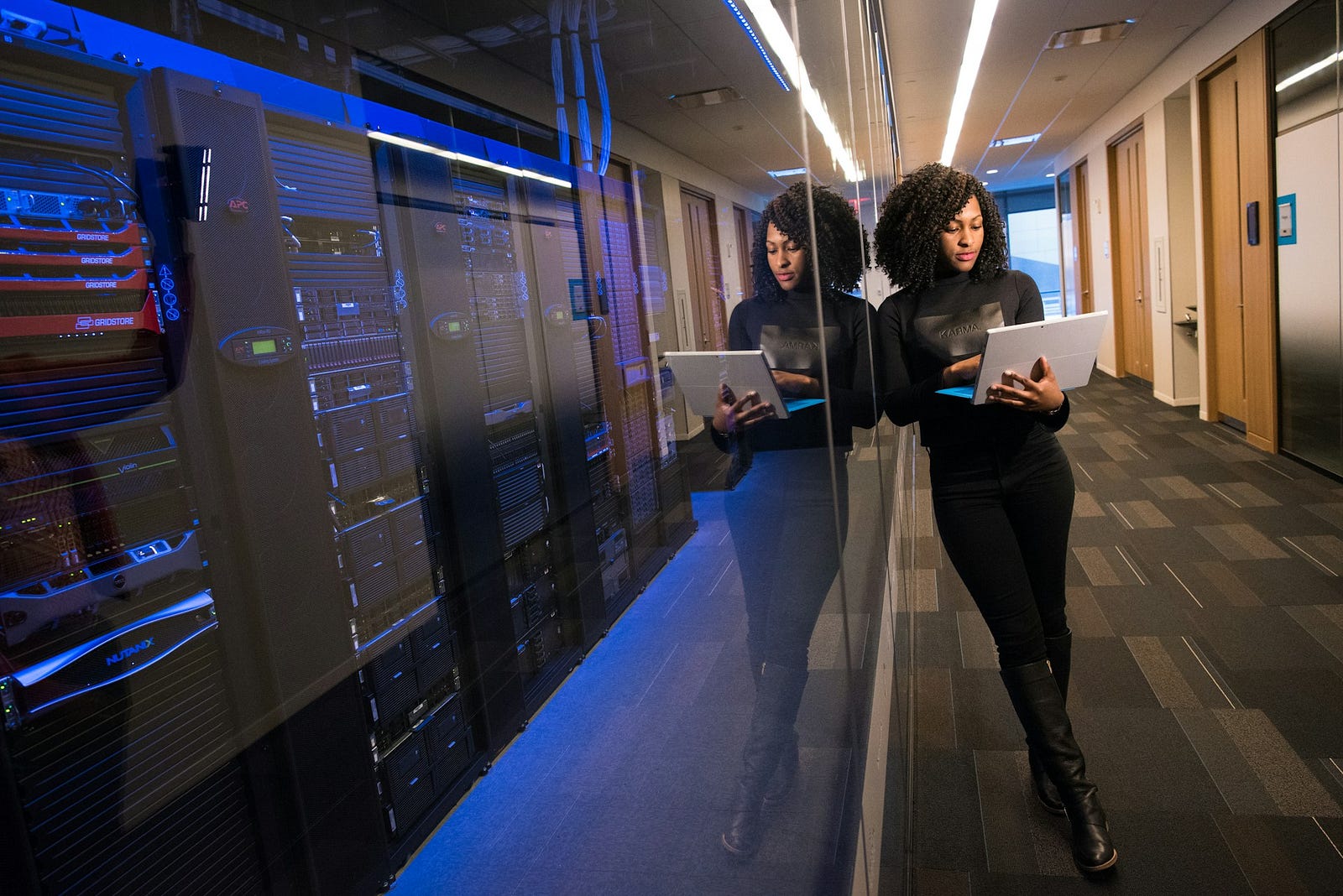
Data centers have accomplished something nearly impossible in contemporary America: They have united Republicans and Democrats.
Unfortunately for the industry, both parties are uniting against them.
A Gallup poll this spring found that 71 percent of Americans opposed constructing an AI data center in their area, including 48 percent who were strongly opposed. Democratic candidates are using them against Republicans in Texas and Ohio. Republicans are returning the favor in Wisconsin and Pennsylvania. Texas Gov. Greg Abbott, who declared his state the “epicenter of AI development” last year, has temporarily halted new grid connections while regulators audit pending projects. Pennsylvania Gov. Josh Shapiro, another enthusiastic technology booster, has imposed strict new conditions on developers.
President Donald Trump believes the industry needs “a little public relations help.” That is certainly true, although better advertising alone will not fix the problem.
Data centers have developed a bad reputation partly because the industry made a dreadful sales pitch. Its message has sounded something like this: The richest companies in the world need enormous quantities of your electricity and water. They may receive tax abatements. Their facilities will create many construction jobs but relatively few permanent ones. The artificial intelligence they support might eventually replace your job. Please welcome them to town.
Who could resist?
AI executives spent years making astonishing claims about their technology. It would surpass human intelligence, eliminate vast categories of employment and perhaps become an existential threat to humanity. Such warnings attracted investors and conferred an air of world-historical importance on the people making them. They also terrified the public.
Now the same industry wants Americans to subsidize the physical infrastructure supporting this allegedly job-destroying technology. It should not be surprised by the response.
The burden-benefit imbalance is also difficult to ignore. The benefits of AI are national, long-term and sometimes speculative. The costs of a data center are local and immediately visible. A community gets the transmission lines, construction traffic and industrial buildings. Residents may worry about groundwater or see new infrastructure costs appearing on their electric bills. Meanwhile, the company announces that its project represents billions of dollars in “investment,” much of which is spent on servers rather than circulating through the local economy.
Not every concern is equally persuasive. Data centers account for a modest share of national water consumption, particularly compared with agriculture. New closed-loop cooling systems can operate with minimal additional water after being filled. But national totals can conceal local scarcity. A facility in a water-rich region is different from one drawing from a strained aquifer in an agricultural county.
Electricity is the more serious problem. Data centers could consume between 9.5 and 15.3 percent of American electricity by 2030. Meeting that demand will require new power plants, substations and transmission. Families understandably object if they are asked to finance infrastructure built primarily for some of the wealthiest corporations ever created.
Trump’s Ratepayer Protection Pledge offers the beginnings of an answer. Participating companies promise to build, bring or buy the power they need and pay for the infrastructure required to deliver it. It is excellent policy in principle and potentially excellent politics: America can win the AI race without making working families subsidize Big Tech.
But a pledge must become an enforceable bargain. Developers should sign long-term power contracts, provide financial guarantees and accept responsibility for stranded infrastructure if a speculative project is canceled. Existing households, farms and small businesses should retain access to existing low-cost power. New industrial customers should pay the actual marginal cost of serving them.
Communities must also receive benefits they can see.
Loudoun County, Virginia, demonstrates what that can look like. Data centers generate almost half of its property-tax revenue, helping finance schools and public services while allowing officials to reduce the residential property-tax rate substantially over the past decade. Because server equipment is extremely valuable and requires relatively few public services, a properly taxed data center can be a municipal asset.
The phrase “properly taxed” is essential. States cannot promise a fiscal windfall while exempting most of the valuable equipment that produces it.
Quincy, Washington, offers another model. Microsoft helped develop a system that treats industrial wastewater and reuses it for data-center cooling. Instead of merely compensating the city for consuming a scarce resource, the project helped solve an existing infrastructure problem.
In Finland, waste heat from Microsoft data centers is being captured and fed into a district-heating network serving homes, businesses and public buildings. Once fully operational, the project is expected to supply roughly 40 percent of the network’s heating demand. The exact model will not work everywhere, but universities, hospitals, military installations and industrial parks with centralized heating could use similar systems.
Data centers can also become more flexible electricity customers. Some AI training and batch-processing tasks can be moved to off-peak hours. Facilities can reduce consumption during grid emergencies, pre-cool buildings or rely temporarily on batteries. In exchange for faster grid connections or favorable rates, utilities should require enforceable curtailment commitments.
None of this means every project should be approved. Loudoun residents have begun objecting to excessive concentration and poor siting despite the enormous tax revenue. That is understandable. Fiscal benefits do not excuse placing windowless warehouses beside subdivisions or routing intrusive transmission lines through established communities.
The industry needs standardized community-benefit agreements disclosing expected power and water consumption, tax incentives, employment and infrastructure costs. Local governments should negotiate protections covering setbacks, noise and emergency generators before granting approval. Secret negotiations and nondisclosure agreements create the impression that developers and politicians are dividing the spoils while residents receive the bill.
The political backlash could become dangerous. A nationwide moratorium would surrender investment, productivity and strategic advantage while China continues building. America cannot lead the AI revolution without the physical infrastructure required to operate AI.
But national importance is not a blank check.
Data centers do have a public-relations problem, aggravated by executives who portrayed AI as both an economic miracle and a possible apocalypse. More important, however, they have a community-relations problem. Public opinion will not be repaired by optimistic commercials featuring smiling electricians and glowing computer screens.
The industry must offer Americans a better deal: protect household electric bills, pay meaningful taxes, build new generating capacity and leave useful infrastructure behind.
The winning argument is not that communities must tolerate data centers because the future is inevitable. It is that America can build the future while making the communities that host it demonstrably better off.
(Contributing writer, Brooke Bell)